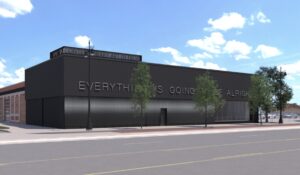





Detroit’s riverfront is not just a shoreline — it’s a public room, an economic asset, a climate opportunity and a burgeoning potential to be a global benchmark for a sustainable placemaking. Recent investments and future plans that include the new 22-acre Ralph C. Wilson, Jr. Centennial Park, A.B. Ford Park and Community Center, the Renaissance Center Plaza and the Huntington Place Connector facing the Detroit Riverfront demonstrate how reconnecting Detroit assets and residents to the river catalyzes health, tourism, and private reinvestment; while restoring ecological function along the waterfront. Anchoring placemaking around resilient landscapes, community-driven programming and ushering in a new sustainable Detroit economy will amplify those returns.
Strategy overview — two integrated tracks
1. Placemaking that centers ecology, equity, and commerce along the Riverfront;
2. Regional development of mass-timber manufacturing and workforce pathways that supply low-carbon building materials for local projects and regional markets.
Both tracks reinforce one another: visible, well-used public spaces create demand for new buildings (visitor centers, mixed-use blocks, cultural venues) — and mass timber offers a biophilic, rapid construction, low-carbon material that can be locally produced and showcased on the waterfront.
The Art of Placemaking / Placekeeping
• Greener shorelines and accessible design: Expand native wetland buffers, living shorelines, and shade canopy to reduce stormwater runoff and heat-island effects while providing habitat and recreational access. The East Riverfront Framework already demonstrated a prioritization of preserving public riverfront land and improving access — this plan can be layered with nature-based infrastructure.
• Program hubs and cultural anchors: Locate year-round pavilions, seasonal markets, and a riverfront “maker-row” where Michigan timber products and public exhibitions (mass timber demo structures, companion artisan marketplaces) are staged, illustrating the innovation of Detroit and what it means to be a UNESCO City of Design. These anchor uses maintain daily visitation, foster community stewardship and showcase headline festivals encouraging the burgeoning tourism industry.
Why Mass Timber — The Regional Case
Mass timber (CLT, glulam and related products) stores carbon in building fabric, speeds construction, and cuts embodied emissions far beyond comparable construction systems — benefits that matter when cities are trying to reduce lifecycle carbon of construction. Michigan research and state planning show growing interest and latent demand: universities, state agencies, and local stakeholders are exploring the market and developing an eco-system to accelerate mass-timber capacity. Supporting local mass-timber production is both a sustainable carbon strategy and an economic development opportunity for Michigan’s forested regions that can highlight the innovation of the City of Detroit.
Policy and Investment Levers
• Public procurement targets: Detroit can adopt a “buy-low-carbon” policy that gives preference (or points) to projects using mass timber where life-cycle analysis supports lower greenhouse gas impacts. This creates near-term demand for local producers and a market signal for investors.
• Incentives for regional mills: Offer tax-increment financing, land or equipment grants, and workforce training credits to attract CLT/GLT manufacturing to Michigan — pairing these with community benefits agreements ties growth to development and local hiring.
• Demonstration funding: The state and city could co-fund/incentivize a waterfront “mass-timber cultural center” and mid-rise mixed-use buildings utilizing locally fabricated panels. Demonstrations reduce perceived risk, provide procurement case studies, and create tourism-worthy showcases on the Riverfront. Partnering with an institution such as MassTimber@MSU leverages the work of the ecosystem already in progress.
• Workforce and supply chain development: Build apprenticeships that link forestry, sawmilling, CNC production, and on-site assembly. Coordinate landowners, DNR programs, and university extension to ensure sustainably sourced fiber and long-term forest stewardship.
Design and Resilience Considerations
Mass timber must be integrated with resilient design. Pairing mass timber with green infrastructure along the riverfront creates an expressive, warm material palette while meeting durability and lifecycle goals. Rigorous life-cycle assessments should guide materials choices to ensure the climate benefits of timber are realized.
Economic and Social Outcomes
A coordinated Riverfront + Mass-Timber strategy can: (1) generate construction and manufacturing jobs across Michigan, (2) keep value-added wood processing dollars in-state, (3) reduce the carbon footprint of new construction, and (4) produce a world-class public waterfront that attracts visitors and new residents. Studies and state initiatives suggest that deliberate policy boosts (procurement, incentives, demonstration projects) are critical to move from pilot to scale.
Conclusion — a Living Corridor
Detroit’s Riverfront can be the literal showcase for a lower-carbon, job-rich regional economy. By pairing community-led placemaking with state and local investments in mass timber manufacturing, Michigan can turn under-used forests and a reimagined waterfront into a durable economic and climate asset — one cultural center, one public realm, and one factory at a time.