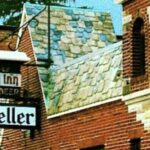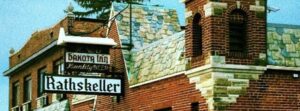

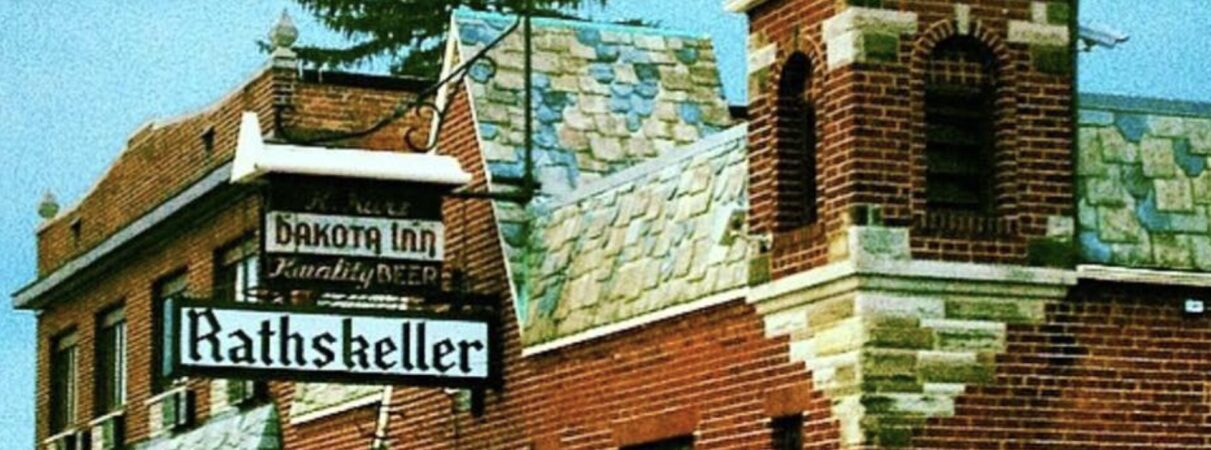



On any given day, Paddy Lynch might be standing beside a family at a burial, guiding them through one of the most difficult moments of their lives. A few hours later, he could be at the Dakota Inn Rathskeller, checking in on a full dining room or talking through plans for what comes next.
It’s not a shift he finds unusual.
For Paddy Lynch, the connection between those worlds is more natural than it might seem. He is a third-generation funeral director. His family owns eight funeral homes across Southeast Michigan, and he still works full time in one of them. That work – people-centered and deeply personal – has shaped how he views the world. About 15 years ago, he began restoring old buildings and businesses in Detroit, projects that, by his own admission, were never part of a broader plan.

PADDY LYNCH
“They’ve all been somewhat serendipitous,” he says. “Something comes along, I have some kind of connection to it, and if it makes sense, I’ll pursue it.”
Over time, those projects have become a distinct collection: The Schvitz, a former convent, Dutch Girl Donuts, and now the Dakota Inn. Different types of spaces, but connected in ways that aren’t immediately obvious unless you spend time with him.
What draws him in is continuity.
Most of the places he’s taken on have long histories. The Schvitz dates back to 1930. The Dakota Inn to 1933. Dutch Girl to 1947. They are, in his words, “iconic.” They are places people remember that are tied to routines, communities, and identities.
“I’m a nostalgic and sentimental person,” he says. “And I think funeral service has influenced that. You’re constantly dealing with memory and legacy and storytelling.”
That connection – between memory and place – is where the work starts to come together.
In funeral service, the focus is on honoring a person’s life, often through rituals that are both structured and deeply personal. In his hospitality work, the stakes are different, but the instinct is similar. The goal is to preserve the setting where those kinds of memories happen in the first place.
“People are more important than buildings,” he says. “But people build buildings, and memories happen inside of them. When you take care of those spaces, you’re honoring the people who built them and the people who spent time there.”
That perspective shapes how he approaches each project. He’s not looking to reinvent these places. If anything, he’s trying to avoid that.
“Generally, my goal is to add rather than replace,” he says.
At the Schvitz, that meant preserving long-standing traditions, like men’s nights, while expanding access to include co-ed and women’s hours. At the Dakota Inn, it meant keeping the German beer program intact while introducing a wine program the space never had before. The idea is to build on what exists, not erase it.
“All of these places come out of a small business tradition,” he says. “Family-owned, community-based. That’s what I come from. I’m not a corporate person, and I’m not someone who looks to government to solve things. Small business, to me, is this interesting third way where you can be independent and still have an impact.”

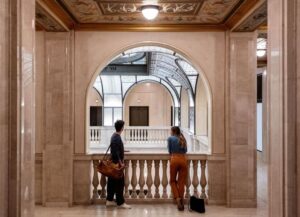
THE SCHVITZ
That independence is part of what allows the work to stay grounded. The businesses are public facing, but they are also inherently local. They employ people who live nearby, and they serve communities that have, in many cases, been tied to these spaces for decades.
Lynch says the city’s history is not abstract. It’s tied to real neighborhoods, real buildings, and communities that were shaped by immigration, industry, and shared experience.
“When you hold onto places with strong ethnic identities, you’re preserving something important,” he says. “Detroit has always been incredibly diverse, and these spaces reflect that.”
At the Schvitz, that history includes its roots in the Russian and Jewish communities. At Dutch Girl, it’s its place within Detroit’s Black community. The Dakota Inn carries its own, primarily Germanic, cultural lineage. Each one represents something specific, and part of the responsibility, as he sees it, is to protect that.
That doesn’t mean the work is easy.
When Lynch first got involved with the Schvitz, the building was in serious disrepair. Parts of the roof were failing, the operating model was unstable, and there were subcultures that had kept the doors open, but the space itself needed investment and a shift in direction to survive.
“It was barely holding on,” he says. “A lot of people had done everything they could to keep it going, but it needed more.”
Much of the revenue now goes directly back into the building. He says progress is steady and deliberate.
Across all of his projects, that pattern repeats. It’s about stepping into something that already exists and figuring out how to sustain it.
That’s part of why he doesn’t frame these places as his.

DUTCH GIRL DONUTS
“I don’t really see them as mine,” he says. “I see myself as the current caretaker. Hopefully they’re here long after I’m gone.”
That mindset carries through in how he talks about the people involved. He’s quick to deflect credit, pointing instead to the teams that keep each space running day to day.
“People ask how I do it,” he says. “But I don’t do it. It’s teams of people, different skill sets, different backgrounds, all working together. That’s what makes it work.”
What he values most is seeing those communities form and sustain themselves.
“It’s a privilege to employ people and to be part of something like that,” he says. “To see those spaces filled, to see people enjoying them, to see staff taking ownership – it’s meaningful.”
Looking ahead, we’ll see a second Dutch Girl Donuts very soon at East Grand Blvd and Oakland in the historic Howrani Studios building.
But ultimately, his goals are relatively simple. He’s not trying to scale a concept or build a portfolio in the traditional sense. If anything, he’s focused on maintaining what’s already in place.
“If nothing else, I hope these spaces remind people that it’s worth trying to preserve a building – and the memories and community that come with it – before tearing it down,” he says.
As always, be sure to subscribe to our newsletter for regular updates on all things Detroit and more.