



For Michigan’s independent farmers, growing food has never been the hardest part.
Rising labor costs, fuel prices, materials and transportation continue to squeeze already thin margins, while complex supply chains often leave growers with little control over how — or for how much — their products are ultimately sold.
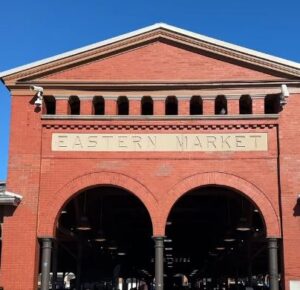
Eastern Market’s new Shed 7 was designed to help change that.
The recently opened 43,000-square-foot wholesale distribution facility represents a $16.6 million investment in infrastructure that helps independent growers reach buyers more directly, preserve food quality and strengthen one of the country’s last major public wholesale food markets.
“For more than 130 years, Eastern Market has served as a vital link between farmers and consumers,” said Katy Trudeau, President and CEO of Eastern Market. “At a time when farmers are facing increasing economic pressures and market challenges, Shed 7 will help connect them with buyers, distribution channels and new opportunities for growth. That is essential to building a resilient food economy for the future.”
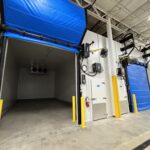
REFRIGERATED UNITS
Most Detroiters know Eastern Market as the city’s iconic Saturday destination, where thousands gather each week to shop, eat and explore. But long before shoppers arrive, another side of Eastern Market is already at work.
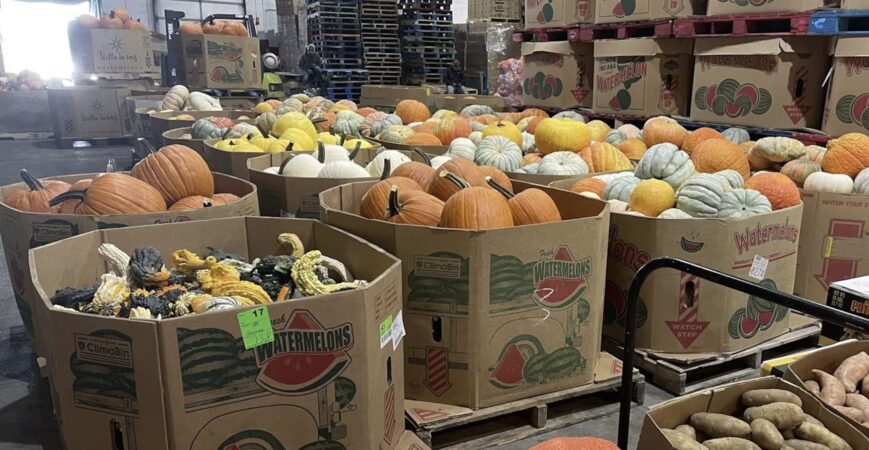
Between midnight and 6 a.m., roughly 200 million pounds of Michigan specialty crops move through the market’s wholesale district each year, supplying independent grocers, restaurants, schools, hospitals and institutions across the region.
“Eastern Market has always been a place for wholesale transactions — that’s where we started in 1890,” said Brandon Seng, Director of Programs for Eastern Market Partnership. “Saturday morning is the experience most residents know. But what happens overnight is what feeds our community.”
That wholesale operation is what makes Eastern Market unlike almost any other market in the country.
While many wholesale food distribution systems have consolidated around large grocery chains and massive logistics centers, Eastern Market continues to serve independent grocers and growers. Southeast Michigan is home to more independent grocery stores than any other region in the country, Seng said, and Eastern Market remains a critical access point connecting those businesses directly with local producers.
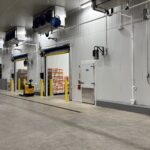
INSIDE SHED 7
“What makes us different is that instead of being a distribution center for a grocery store chain, this is truly an access point for independent operators who don’t have a large distribution network behind them but can still come and buy wholesale products,” he said.
That model has become even more important as farmers face mounting financial pressures.
“Agriculture is a really difficult industry,” Seng said. “Input costs are going up. Labor is up. Fuel prices are up. Material costs are up. At some point it becomes very difficult for a farmer to eke out a margin.”
Traditional supply chains often require produce to pass through multiple brokers and distributors before reaching its final destination, with each step adding cost while reducing the grower’s share of the return.
Eastern Market offers a different model by bringing buyers and sellers together in one place.
“Instead of seven hands that product has to pass through, it’s one,” Seng said. “That’s better for the buyer and it’s better for the grower.”
Shed 7 expands that approach by giving growers access to modern refrigerated storage, allowing them to hold products on site while connecting with buyers rather than immediately loading trucks back to the farm at the end of each day.
Cold storage may sound like a simple upgrade, but Seng said it plays a critical role in both food safety and business growth.
“The longer product stays below 40 degrees, the safer it is,” he said, noting that maintaining the cold chain from harvest through delivery is particularly important for schools, hospitals and other institutions serving vulnerable populations.
Improved refrigeration also creates new opportunities for growers by giving them additional time to market their products while reducing transportation and logistical challenges.
The project reflects Eastern Market’s broader effort to modernize infrastructure while preserving the characteristics that have defined the district for more than a century.
Much of the wholesale market was built for a very different era.
“Our infrastructure was built for horse and wagon,” Seng said. “Loading at street level doesn’t get us there anymore.”
With dock-level loading and modern cold storage, a process that once took a farmer two hours can now take about 20 minutes, allowing more time to move products, meet buyers and improve profitability.
Unlike many large-scale food distribution facilities across the country, Shed 7 wasn’t designed simply to move greater volume.
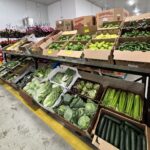
INSIDE SHED 7
It was designed around the people who already rely on Eastern Market.
“We’ve got 130 years of doing this work, so it’s surveying our growers to ask what they need,” Seng said. “Whether you’re an urban farmer with one or two acres or a larger farm with 20 acres, Shed 7 was built to support the full range of growers already participating in our network.”
Eastern Market also plans to use the new infrastructure to strengthen its own food access programs, including mobile markets that bring fresh produce into neighborhoods where residents may not be able to visit the market. Seng said the facility creates new opportunities for growers to participate while helping Eastern Market deliver more locally grown fruits and vegetables directly into the community.
The facility includes dedicated cold storage for regional farmers, refrigerated space for Detroit growers and dedicated space for growers of color and small-scale food businesses, helping expand access to wholesale markets and critical infrastructure that has historically been out of reach for many independent entrepreneurs.
The project was made possible through a coalition of public and private partners, including the Gilbert Family Foundation, whose investment reflects a broader commitment to expanding economic opportunity through Detroit’s food economy.
“For the Gilbert Family Foundation, investing in Shed 7 was really about investing in people,” said Linda Nosegbe, Director of Economic Mobility at Gilbert Family Foundation. “We know independent farmers and small food businesses often face barriers to growing and scaling their businesses. Shed 7 creates more opportunities for those entrepreneurs to reach new customers, increase their revenue and build sustainable businesses that support their families and communities.”
Nosegbe said the project also aligns with the Foundation’s broader mission of expanding economic mobility by creating pathways for entrepreneurs to succeed and ensuring opportunity is accessible to more people.
“At the Gilbert Family Foundation, we believe economic mobility begins with expanding opportunity,” she said. “By creating greater access to customers, resources and markets, we’re strengthening pathways for small businesses to grow while building a more resilient and inclusive regional food economy. We hope Shed 7 serves as a catalyst for innovation, job creation and long-term prosperity for Detroit and the entire region.”
For Seng, the investment is ultimately about preserving a system that has supported Michigan farmers for generations while preparing it for the next century.
“We have five growers that have been selling here for 130 years, and they’re still here,” he said. “They’ve given so much to the community.”
With Shed 7, Eastern Market isn’t simply modernizing its infrastructure. It’s strengthening the network of independent growers, food businesses and community partners that has sustained Michigan’s food economy for more than 130 years – and positioning it for the next century.
As always, be sure to subscribe to our newsletter for regular updates on all things Detroit and more.