



Eating more sustainably doesn’t mean you need to change your whole diet; it can start with one meal. That’s the idea behind Eat for Impact.
This month, the initiative is returning to Detroit for its second year once the founders saw the insatiability of the city. Six local restaurants are offering plant-based specials designed to give Detroiters an accessible way to reduce the environmental impact of their food choices.
The goal isn’t to convince everyone to become vegan or completely overhaul their diets. In fact, 75% of diners who participated in Detroit’s 2025 Eat for Impact initiative said they were not exclusively plant-based eaters.
“We don’t ask people to go completely plant-based,” says Britty Mann, executive director of Planted Society, which supports Eat for Impact initiatives in communities around the country. In Detroit, local organizers Nicole Bernabela and Kirsten Gardner are leading the effort for now the second year.
“Data shows that when people are asked to overhaul how they eat, they’re less likely to stick with it long-term,” says Mann. “But if we ask people to try one dish at a restaurant they already love, it’s an easy yes for many patrons.”

IVY KITCHEN & COCKTAILS
Mann says the food system is responsible for roughly a quarter of global greenhouse gas emissions, yet food choices can sometimes receive less attention than transportation, energy use and waste.
“Food often gets left out of the climate conversation, sometimes intentionally, because it’s personal and rethinking it can feel like giving up something that matters to us,” she says. “But we’re finding that people want to eat more sustainably. They just don’t know where to start.”
Eat for Impact attempts to provide that starting point through something people are already doing several times a day.
“One small meal is a small thing, but most of us eat three or more times per day, every day, which makes food one of the easiest ways to take climate action without buying anything new or changing your routine,” Mann says. “If you’re already grabbing lunch or picking up groceries, choosing something plant-based just means that your meals are doing a little extra good each time.”
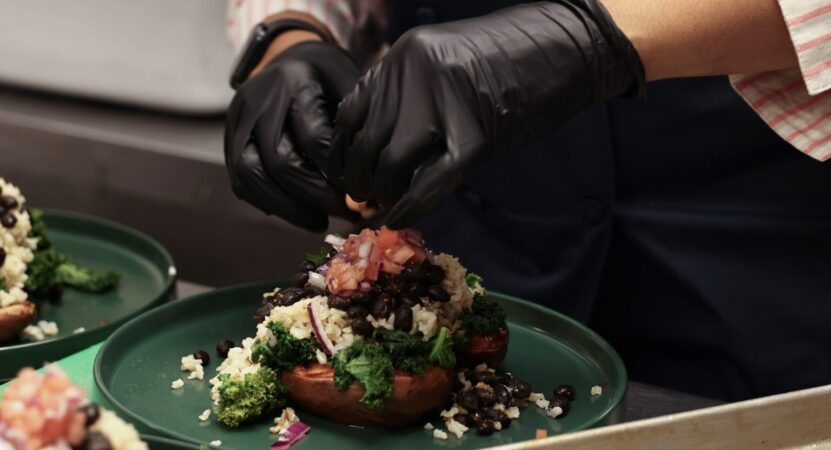
The restaurants involved have created plant-based specials such as a Jerk-Marinated Cauliflower Steak at Ivy Kitchen & Cocktails, Harvest Bowl at The Kitchen by Cooking with Que, and a Buffalo Cauliflower Wrap at Avalon, among others.
“We intentionally work with chefs who are willing to get creative,” she says. “The climate benefits are just an added bonus for most customers, which is fine by us.”
In 2025, Eat for Impact generated an estimated $49,503 in sales of plant-based specials at participating area restaurants. Organizers also estimated that the dishes saved approximately 16,805 kilograms of greenhouse gas emissions, 1.9 million liters of water and 21,267 meters of land during the month.
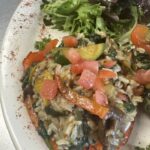
DETROIT PEOPLE’S FOOD CO-OP
Mann says the organization calculates the environmental impact by comparing each plant-based dish with a version that would traditionally contain animal protein and calculating the difference across the number of dishes ordered.
Last year, the impact also continued after September. Four participating restaurants committed to keeping at least one special on their regular menus, and two committed to creating additional plant-based dishes. Planted Society estimates those changes resulted in savings of approximately 150,000 kilograms of greenhouse gas emissions over the past year.
Mann says restaurants and food retailers pay close attention to what customers buy, which in turn influences what they continue to offer.
“I started my career in supply chain, working both as a food purchaser and on the manufacturing side, and I can say with confidence that your breakfast, lunch and dinner choices have more influence than you’d think,” she says. “Not only are they individually meaningful to the small businesses you support, but what you’re choosing directly influences what stays on the shelf or on the menu.”
In Detroit, residents can also participate through a climate “passport” featuring everyday actions such as riding the People Mover or QLINE, walking or biking the Detroit RiverWalk, saving leftovers, visiting the Detroit Public Library and talking with others about climate issues.
For Planted Society, the effort is also about connecting sustainable food choices to the communities where they are made.
“We see restaurants, cafes and grocers as community members and neighbors,” Mann says. “And being a good neighbor means taking care of the place you share, which includes investing in the long-term wellbeing of the community.”
Detroit partners include organizations already working within the community, such as the Detroit People’s Food Co-op. Mann sees their involvement as an extension of sustainability work already happening in the community.
As always, be sure to subscribe to our newsletter for regular updates on all things Detroit and more!