



Detroit has never had a shortage of musical talent. Across generations and genres, the city has produced artists, musicians and sounds that reshaped popular culture.
There is no question Detroit’s next generation has talent. The bigger question is whether the city can provide the resources, connections and opportunities to help that talent grow.
Across the region, studios, youth organizations and music professionals are building different pieces of that infrastructure. Some are introducing young people to careers they may never have considered. Others are creating places where artists can collaborate, learn and develop their craft. Still others are helping independent musicians navigate an industry that gives them more tools and autonomy than ever before, along with more responsibility for building their own careers.
For Shawn H. Wilson, president and CEO of Boys & Girls Clubs of Greater Detroit (BGCGD), the distinction between talent and opportunity is critical.
“Talent can show up early. Access usually does not,” Wilson says. “Artists and innovators do not succeed on talent alone. They need infrastructure: mentors, equipment, spaces to practice, professional networks, honest feedback and opportunities to prove what they can do.”

ENTERTAINMENT INNOVATION INCUBATOR
BGCGD is investing in that infrastructure across its six clubs, including the new Entertainment Innovation Incubator at Michigan Central, supported by Big Sean, Usher and Red Hot Chili Peppers drummer Chad Smith. Studios and creative spaces introduce young people to music and entertainment while broadening their understanding of where those interests can lead.
Because for every artist onstage, Wilson points out, an entire workforce operates around them.
“Every concert at LCA, festival on the Riverfront, sporting event and major conference requires sound engineers, lighting designers, camera operators, stage managers, wardrobe teams, content producers, tour managers, logistics professionals and entrepreneurs,” he says.
The goal is to turn exposure into tangible pathways. A recent R&B Tour internship program placed Detroit youth on the road for two and a half months and 18 stadium shows. According to Wilson, every Detroit intern was ultimately hired to finish the tour.
“Mentorship tells a young person they belong. Access opens the door. Hands-on experience gives them proof,” he says.
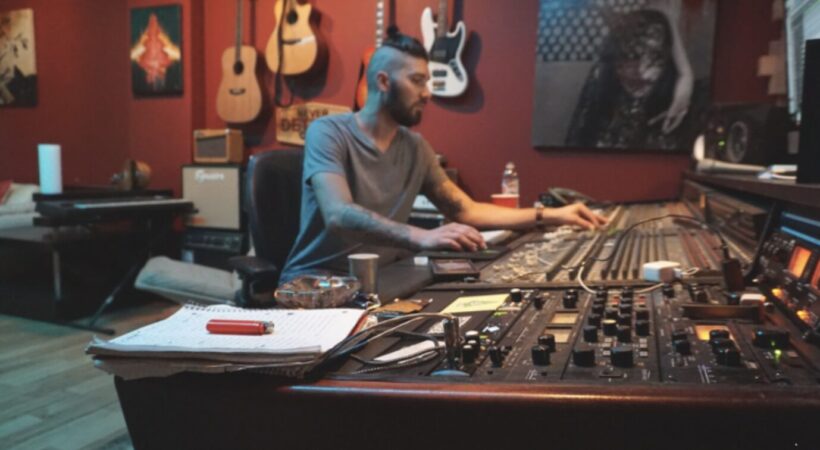
A few miles away in Ferndale, F.B.T. Studios is supporting Detroit talent at another stage of the creative journey. Jake Bass is carrying forward a family legacy deeply rooted in Detroit music.

F.B.T. STUDIOS
His father, Jeff Bass, and uncle, Mark Bass, helped launch Eminem’s career as the Bass Brothers, and Jake began working at their studio as a runner when he was 14.
Running the studio was always his dream. After remodeling the facility in 2023, Bass made F.B.T. public for the first time, opening a space once closely associated with Detroit hip-hop to musicians and creatives across genres.
“I knew Detroit had great talent, and I wanted to make our facility public for the first time, creating an accessible place for musicians and creatives alike to record and create,” Bass says.
What he is seeing there speaks to another need among today’s artists: connection.
Technology has made it possible to build a song among people who may never occupy the same room, passing files between writers, producers and musicians. Bass is seeing some young artists move in the opposite direction.
“The coolest trend I’m seeing from artists coming through the studio is the return of playing live together,” he says. “When artists come in and record live with a handful of takes, that’s where the magic is.”
Bass believes the next generation needs opportunities to spend time with other musicians, experiment with instruments, exchange ideas and build relationships away from screens.
“There aren’t many spaces that allow artists to feel seen, safe and vulnerable enough to express themselves,” he says. “The few spaces that exist have become legendary for that reason.”
Michael Seger of Get Fresh Studios sees a related need from his vantage point.
When Seger opened the Detroit-area studio, his initial goal was to give independent musicians access to high-caliber recording without exhausting their budgets. After more than two decades working as a producer, engineer, songwriter and performing musician, he came to see studio access as only one piece of what emerging artists need.
Today, he describes Get Fresh as a creative incubator and connector.
He says the musicians coming through its doors are often remarkably self-sufficient. They may already be managing their own distribution, social media and branding before entering a professional studio. That independence has created opportunities previous generations didn’t have, while requiring artists to master far more than making music.
“The challenge isn’t a lack of raw talent or drive; it’s signal-to-noise ratio,” Seger says. “In an era where thousands of tracks drop daily, releasing a great audio file isn’t enough to build a lasting career.”
GET FRESH STUDIOS
Get Fresh has responded by extending its role into production guidance, mentorship, professional networking and content creation. Its Detroit Rising showcase, for example, gives artists an opportunity to perform with a live band while capturing multitrack audio and 4K video in front of an audience, producing assets they can use with booking agents, media and labels.
Seger has also mentored more than a dozen studio apprentices, several of whom have gone on to launch studios or engineering careers of their own.
“Connective tissue is everything,” he says. “I actively introduce artists to session players, video crew, collaborators and peers, helping them build a professional network rooted in mutual trust and high work standards.”
How Detroit supports its next generation of musicians can take many forms. A young person may first need exposure to the possibilities within the creative economy. An emerging musician needs places to experiment and collaborators who push the work forward. An artist trying to build a career needs mentorship, professional assets, relationships and a way to distinguish themselves in a crowded global marketplace.
Running through all of it is something Bass, Seger, and Wilson recognize in Detroit’s next generation: the same inclination toward originality that has long defined the city’s music.
Seger sees young creators blending genres and mastering new technologies while remaining deeply connected to community. “They respect the history, but they aren’t bound by it,” he says.
Bass sees the same quality.
“The grit and grind of our Detroit spirit is what separates us from all the other musical hubs across the country,” he says. “It’s the authenticity of our artists: not following the next best thing, but becoming the next best thing by staying real.”
Wilson also sees an opportunity to make sure more of the jobs, businesses and economic opportunities created by Detroit talent stay in Detroit.
“Detroit has always created the talent and culture the world consumes, but too often the infrastructure, jobs and ownership surrounding that talent have been built somewhere else,” he says.
Changing that equation could define the city’s next musical chapter. Wilson points to a generation already moving fluidly between music, fashion, film, gaming, technology, live experiences and entrepreneurship, creating possibilities that extend well beyond traditional definitions of the music business.
Detroit has proven many times over that it can produce the talent. The work happening now is about making sure the pathways, spaces, relationships and opportunities are here to support what comes next.
“We have to keep our talent at home,” Wilson says.
As always, be sure to subscribe to our newsletter for regular updates on all things Detroit and more.