



Domestic violence does not always leave a visible mark, and leaving an abusive situation is rarely as simple as walking away.
There may be children involved, financial dependence, housing concerns, threats or fear of what could happen next. Someone can appear fine to the people around them while living with coercive control, intimidation, isolation, stalking or financial abuse.
At HAVEN, those realities shape work that reaches far beyond providing a safe place to stay. For more than 50 years, the Oakland County nonprofit has supported survivors of domestic violence and sexual assault through crisis intervention, emergency shelter, counseling, advocacy, forensic nursing, prevention education and help navigating the systems that can become critical when someone seeks safety.

CHRISTINE KINAL
Christine Kinal, HAVEN’s CEO, wants people to reconsider one of the most common questions asked about survivors.
“Instead of asking, ‘Why did they stay?’ we need to start asking, ‘What barriers are keeping them from being safe, and how can we help remove those barriers?’” she said.
Kinal understands that question from several perspectives.
Before leading HAVEN, Kinal served in the Marine Corps and spent much of her career in law enforcement, including as a hostage negotiator and hostage negotiation team leader. Long before either, she was a child living with domestic violence.
“There was something incredibly meaningful about becoming a police officer and suddenly finding myself on the other side of the door,” Kinal said. “As a child, I had been the one calling the police for help. Now I was the person arriving when someone else made that call. My hands were no longer tied.”
Her years in hostage negotiation added another skill set. Kinal trained in reflective listening, empathy, patience, and crisis communication, including time spent working on a crisis line at Common Ground in Oakland County.
“Hostage negotiation taught me that communication isn’t about being the loudest person in the room,” she said. “It’s about listening closely enough to understand what someone needs, lowering the temperature of a situation, building trust, and helping people move toward a safer outcome.”
Today, those experiences inform her work at HAVEN, where the need extends across Oakland County.
“There isn’t a ZIP code in Oakland County that is immune,” Kinal said. “Domestic violence isn’t always something you can see.”
HAVEN provides up to 30,000 individual services in a year, and Kinal said demand continues to challenge the organization’s capacity. Its shelter is frequently full, counseling can have waiting lists and its Prevention Education Team receives more requests from schools and community organizations than it can always accommodate.
What a survivor needs can vary widely and change quickly.
“A survivor’s needs don’t begin and end with emergency shelter,” Kinal said. “Someone may need to talk with an advocate at two o’clock in the morning. They may need a safe place to stay, counseling to begin healing, help navigating the court system or obtaining a PPO, a forensic medical examination after a sexual assault, or assistance rebuilding stability for themselves and their children.”
HAVEN provides those services along with a 24-hour crisis and support line, court advocacy, supportive services and prevention education.
Kinal also sees prevention as a critical part of the organization’s work, particularly with young people.
“If we can teach the next generation what a healthy relationship looks like, respect, boundaries, consent, communication, equality, and also help them recognize controlling or abusive behaviors early, we have an opportunity to change what relationships look like for an entire generation,” she said.
That work happens alongside advocacy with law enforcement, prosecutors, courts, healthcare providers, schools, and policymakers, as well as direct support for people who need help today.
“Prevention works upstream. Advocacy improves the systems survivors have to navigate. And direct services make sure someone has somewhere to turn when they need help today,” Kinal said.
Keeping that full continuum available requires resources, and Kinal said HAVEN is facing that challenge as federal funding for victim services has diminished over the past decade.
On Oct. 23, the organization will hold its inaugural Day of Giving, with a goal of raising $100,000 in 24 hours. Kinal sees the campaign as a return to HAVEN’s roots.
More than 50 years ago, community members recognized that survivors of domestic violence and sexual assault needed somewhere to turn and came together to create HAVEN.
“In many ways, I think our first Day of Giving is an opportunity to return to those roots,” Kinal said. “As government funding becomes less available, we need our community to once again stand with survivors and say that these services matter.”
The money raised will support services across HAVEN, including its crisis line, emergency shelter, sexual assault forensic exams, counseling, court and PPO assistance and prevention education.
Those services can intersect quickly in a survivor’s life.
“Someone may first call our crisis line, need emergency shelter that night, require help navigating the court system the next morning, and then need counseling and support as they begin rebuilding their life,” Kinal said. “Community dollars help make sure HAVEN can be there throughout that journey.”
Domestic Violence Awareness Month will close for HAVEN with a reminder of what can be at stake.
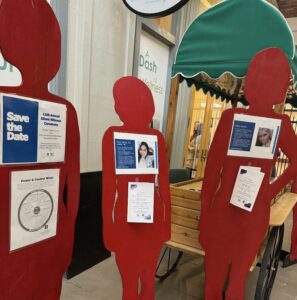
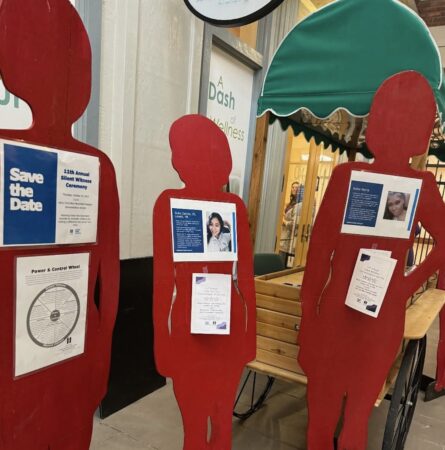
On Oct. 29, HAVEN will join Henry Ford West Bloomfield Hospital for the 13th annual Silent Witness Commemoration Service. Life-sized wooden figures will bear the names and stories of people whose lives were lost to domestic violence. A white rose will be placed in remembrance of each, and a bell will toll.
The figures represent intimate partners as well as children, family members, friends and bystanders killed in acts of domestic violence.
“When we stand among those silhouettes, say their names and share their stories, we’re making a commitment that their lives will not simply become statistics,” Kinal said. “They were someone’s child, someone’s parent, someone’s sibling, someone’s friend. They mattered, and they are remembered.”
For Kinal, the event is also a call to keep moving the work forward.
“These individuals can no longer tell us what happened to them. They can’t advocate for themselves or ask us to make things better. So we have a responsibility to carry their stories forward,” she said. “Their silence has to become our voice.”
As always, be sure to subscribe to our newsletter for regular updates on all things Detroit and more!