



This summer, the Museum of Contemporary Art Detroit (MOCAD) is inviting visitors to something a little different: the creative process.
As part of its 20th anniversary celebration, MOCAD has partnered with Third Man Records to launch The Sounding Room, a rotating residency that transforms the garage of the Mike Kelley Mobile Homestead into a working creative space for sound artists.
Over the next several months, musicians and multidisciplinary artists will use the space for open rehearsals, listening sessions, workshops and performances, giving visitors the opportunity to experience ideas as they’re taking shape rather than after they’re complete.
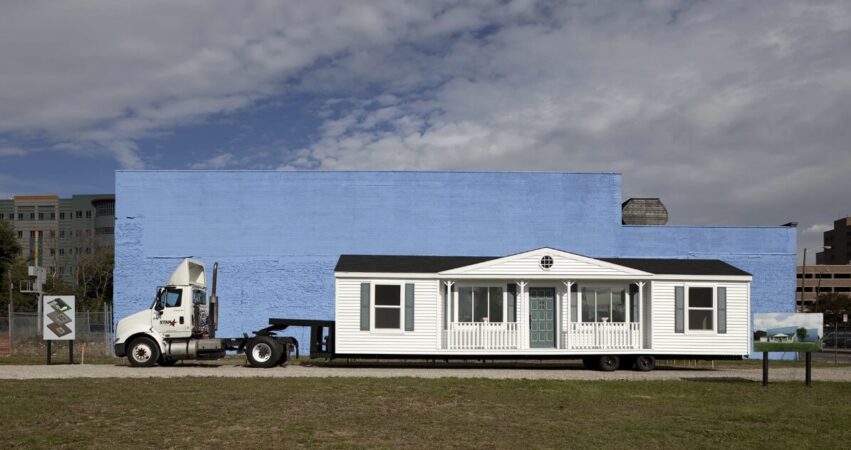
At the center of the project is the Mike Kelley Mobile Homestead, the internationally recognized artwork that sits on MOCAD’s campus. Modeled after the Detroit childhood home of artist Mike Kelley, the structure has long served as both a work of art and a place for community engagement.
For Jova Lynne, MOCAD’s co-director and artistic director, using the space this way feels true to Kelley’s original vision.
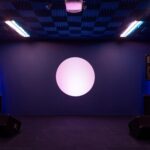
THE SOUNDING ROOM
“Within Mike’s concept, he saw it as an experiment,” Lynne said. “It wasn’t just an exhibition space. It was always intended to be a space for community, activation and curiosity that could support artists.”
That history made the Mobile Homestead a natural setting for The Sounding Room.
“One of the goals is to think about the early days of the Mobile Homestead and the different ways artists used it,” she said. “This isn’t a traditional residency. It’s about creating a space for sound artists to experiment, and Mike Kelley himself worked extensively with sound, so it feels especially appropriate.”
The residency also reflects a broader philosophy about what museums can be.
While museums have traditionally been places where visitors observe finished work, Lynne believes institutions like MOCAD also have an opportunity to become places where people witness creativity in action.
“I’m trying to realize a museum’s full potential,” she said. “Especially as a non-collecting museum, it’s important that we reflect what’s happening in culture right now.”
That means creating opportunities for audiences to experience not only completed artwork, but also the ideas, experimentation and collaboration that happen before a finished piece exists.
“It’s a site for knowledge sharing,” Lynne said. “People get to see what it takes to make something.”
That emphasis on process is intentional.
Artists are often expected to present polished, finished work. The Sounding Room offers something different: time and space to experiment without the pressure of immediately producing a final product.
“Having permission to not be done and to be in the process of art itself feels so valuable,” Lynne said. “Music is so often improvised, and you can’t force it. It’s not about the product. It’s about the process.”
The residency features five Detroit-connected artists working across a wide range of musical styles and disciplines: Shigeto, Zekkereya El-magharbel, Battle Elf, Na Bonsai and David Hurley. Each will spend a month activating the space before presenting a public performance. Those performances will eventually be documented through a limited-edition vinyl compilation produced in partnership with Third Man Records.
Although each artist brings a distinct perspective, Lynne sees a common thread connecting this season’s programming.
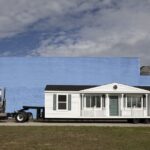
MIKE KELLEY MOBILE HOMESTEAD
“The curatorial theme this year is ‘artists as oracle,'” she said. “Even though they’re working in different genres and mediums, they’re all thinking about reinterpreting history through a contemporary lens.”
That spirit of experimentation extends beyond The Sounding Room itself.
Running alongside the residency is Music from Dimensions Tomorrow, a group exhibition exploring Michigan’s experimental music culture from the 1990s to the present. Together, the exhibition and residency highlight Detroit’s long history of innovation while creating space for new ideas to emerge.
At its core, Lynne sees the residency as a way to create opportunities for artists and audiences to learn from one another.
“Activating the Mobile Homestead feels exciting and timely because we’re bringing together space, resources, artists and audiences in a way that supports community.”
She also sees the residency as an important investment in artists at a time when creative resources can be difficult to find.
“We’re living in a time when artists are under-resourced,” she said. “If we can provide space, an audience and the opportunity to experiment, that’s incredibly meaningful.”
Ultimately, Lynne hopes visitors leave with more than an appreciation for experimental music.She hopes they leave thinking differently about creativity itself.
“I hope people feel inspired,” she said. “I hope they feel like there’s something they can take back and share with their own communities.”
Above all, Lynne wants visitors to recognize that art isn’t something separate from everyday life.
“Art is a reflection of us,” she said. “Even if we’re not artists.”
As always, be sure to subscribe to our newsletter for regular updates on all things Detroit and more.